Getting Strong AND Sculpted With Weights
“How come this strength training program says I have to work out 5 days a week with 3 different exercises for each body part, this one says I need to lift a weight so heavy I couldn’t move it with a forklift, and this one says if I don’t lift dumbbells while standing on a wobbly ball, I'll never get the wobbliness off of my arms?”
Which program should you use?
And why do all the programs look so different?
The answer: Each of these programs is designed with a different goal in mind, and does wonders in achieving that specific goal.
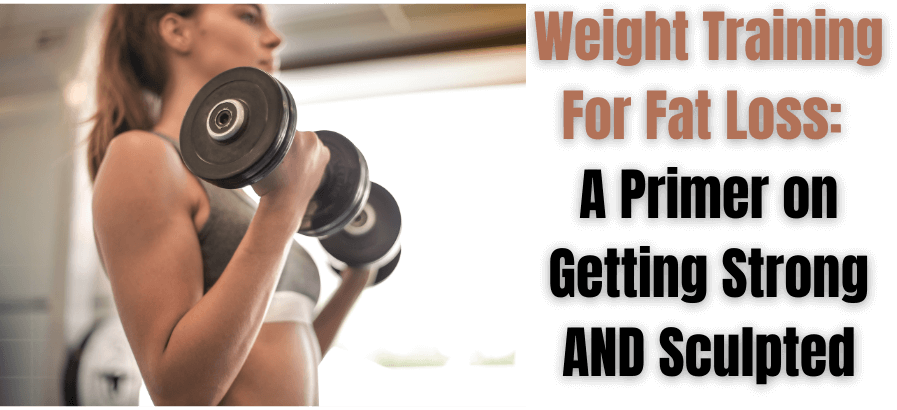
Of course, everyone knows you should weight train if you're getting back into exercise to lose bodyfat.
It’s vital for a girl who wants to boost her metabolism and build curves (purchase this program on ClickBank) where she wants them (and lose curves from where she doesn't).
But there’s a problem here. If you’ve spent any time pursuing the fine art of fat loss, then you know that there’s thousands and thousands of workout programs out there.
But our goal is fat loss – so let’s explore the factors most important to a weight training program designed to maximize fat loss.
They are:
- Work multiple muscle groups at once.
- Keep rest between sets as short as possible.
- Use the principles of intensity and progression to maximize results.
Let’s explore each one in-depth.
Exercise Multiple Muscle Groups At Once
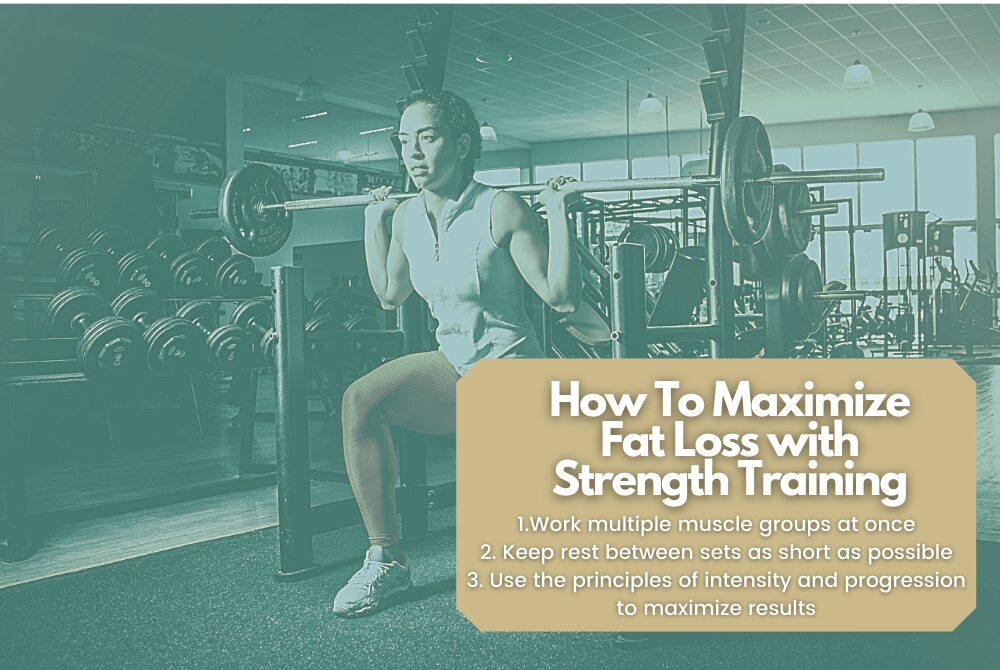
Element one: Work multiple muscle groups at once.
Now hear this: From this point on, biceps curls are out.
You are hereby forbidden from doing hip abduction and adduction (the “inner and outer thigh” machines). Likewise for triceps extensions, calf raises, or any other exercise that you’re working only one muscle group with.
Why? Because efficiency is key to burning belly fat, and they're a big fat waste of your time and energy!
Your goal (fat loss) is hastened by you getting the biggest bang for your buck.
By working multiple muscle groups at once, you increase energy expenditure during the workout, since more muscles are working simultaneously.
Also, you use more weight in exercises that involve multiple muscle groups, which results in greater muscle stimulus.
More stimulus = more muscle built – definitely the scenario we want!
So, select exercises that involve more than one or two muscle groups. Multi-joint exercises are the best ones to choose (squat, deadlift, bench press, rows, etc.).
Short Rest Between Sets
Element two: Keep rest between sets as short as possible.
For fat loss purposes, you should take as little rest between sets as possible. The reason for this rapid-fire stream of exercise is simple:
We’re revving up your fat burning exercise engines!
Think of your muscles as your internal engine – the harder they work in a shorter span of time, the “hotter” your engine will get (akin to the engine in your car, after you floor the accelerator).
What we’re doing is increasing the metabolic output of your muscles by forcing them to burn more fuel for energy, since the energy demands of the exercise are greater.
This metabolic boost is sustained throughout the workout, since you don’t allow your muscles to take a break, and even lingers after the workout (one study from Ohio University found that this rise in metabolism lasts as long as 38 hours post-exercise).
It's called EPOC (excess post-exercise oxygen consumption) and we utilize this effect in our high intensity cardio workouts as well.
Take less rest, burn more calories, both during the exercise and after. It's as simple as that.
Exercise Intensity and Progression
Element three: Use the twin principles of intensity and progression to maximize results.
Some clarification is in order here. When I say intensity, what I'm referring to is the load, i.e., the amount of weight you're lifting.
In general terms, the heavier the load you use (relative to your maximum capacity – 100%), the greater amounts of muscle you'll build. But, don't be scared of building a little muscle!
That added muscle will only help you to burn fat by increasing your resting metabolic levels (the amount of energy you burn at rest). It'll also help to shape your body in ways we can all appreciate.

Additionally, when dieting, your body will indiscriminately burn all kinds of tissues for energy, including fat (which we want to burn) and muscle (which we don't want to burn).
The exception to this biological rule is when you're strength training.
When you strength train, you send a message to your body that muscle tissue is “off-limits” for energy usage, so it goes to fat and carbohydrate for energy (and you get enjoy the amazing disappearing act your fat stores undergo).
So how does this apply to you?
Easy – use the heaviest weights you can handle with impeccable form. By doing so, you simulate the maximal amount of muscle fibers possible.
But we can't look at our workouts in a vacuum. After all, it's not like you intend to do only one workout ever.
As you exercise, you must see progression – in other words, your weights should be getting heavier over time and your work capacity should be increasing.
Progression is simple to deploy in your workouts; just raise the weights by a small increment every time you hit your repetition goals.
Simple to deploy doesn't mean easy to do, and if there's one main failing in most people's programs, it's that they never, ever change. And since their programs never change, their bodies never change either!
No progression, no results. You need to push yourself!
Working out smarter – by combining multiple muscle group exercises, done with as little rest as possible, with effort and progression applied over time – makes for an easy win. BTW, you may also be interested in four workouts tricks that burn more fat.